ServicesCode Corrections
Code Corrections & Inspection Fixes in White Settlement
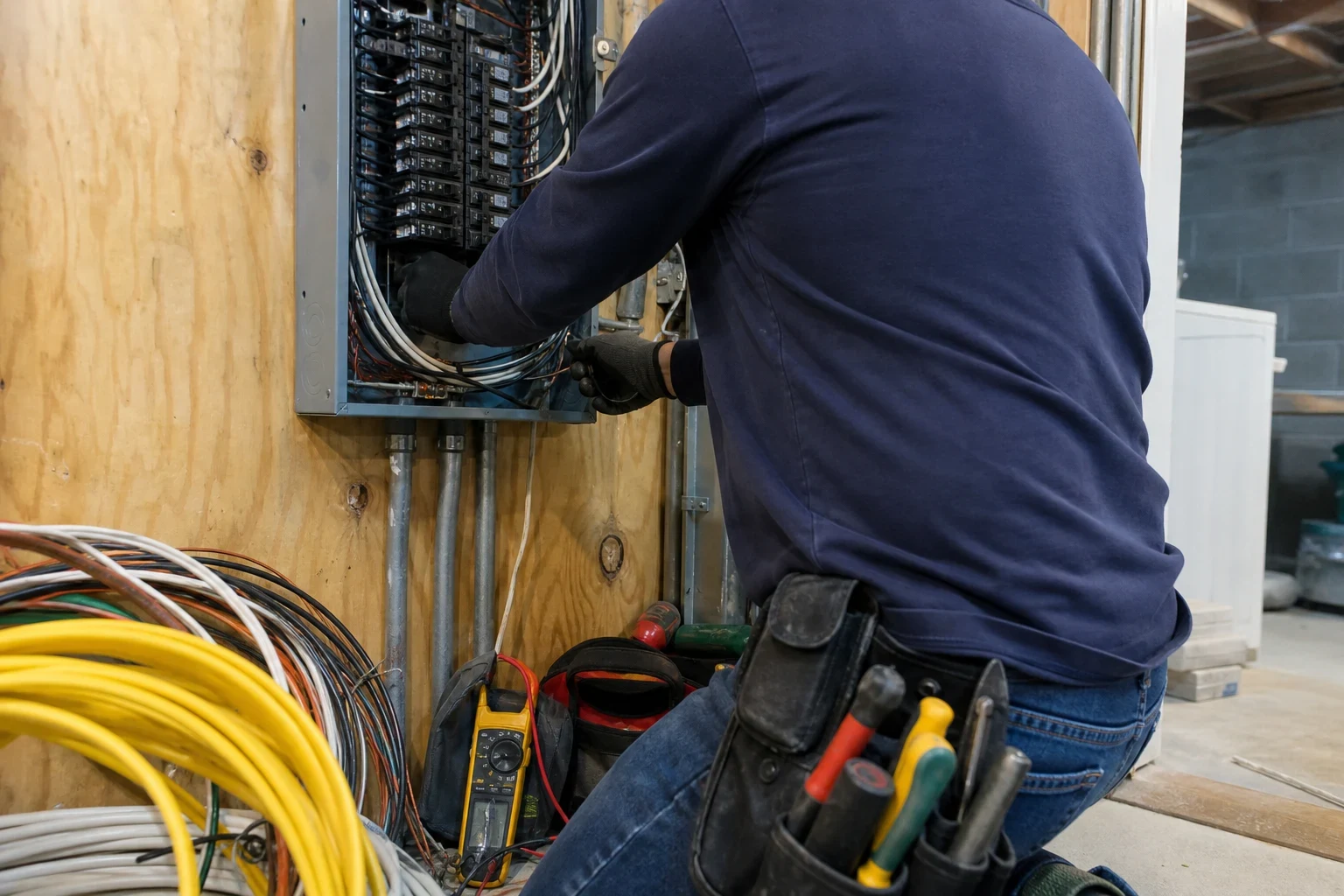
An inspector flagged electrical items at your home and you need them cleared. We go through the report line by line, correct each item to code, test it, and tell you what was wrong. After the work, we check back and show you how to keep it right.
From a deficiency list to completed repairs
Correction lists usually come from three sources: a buyer's inspection ahead of closing, a city inspector who failed permitted work, or an insurer requesting changes before renewing a policy. These reports are brief and often unclear. An entry such as "double tap at panel" or "no GFCI at exterior receptacle" says something is wrong, not what the repair involves.
We turn every entry into a specific fix. A double tap usually means two conductors on a terminal built for one, so we add a pigtail or a breaker listed for two wires. A missing GFCI may be one device swap, or it may mean tracing which outlets share a circuit so a single protected receptacle covers them all.
Once the list is finished, you receive a written summary of each correction and how it was made. We check back after the job to confirm the work is holding, and we explain the small habits that keep it that way, such as testing your GFCIs with the button once a month.
What the correction visit includes
- 01
Going over the report
We go through your inspection report together and group the items into actual code issues, safety concerns and informational notes. You choose what gets done.
- 02
Ground-fault and arc-fault protection
GFCI protection goes where code requires it, such as kitchens, bathrooms, garages, laundry areas and outdoor receptacles. Where AFCI protection is required, we put in the right breaker type and make sure it doesn't nuisance-trip.
- 03
Panel problems
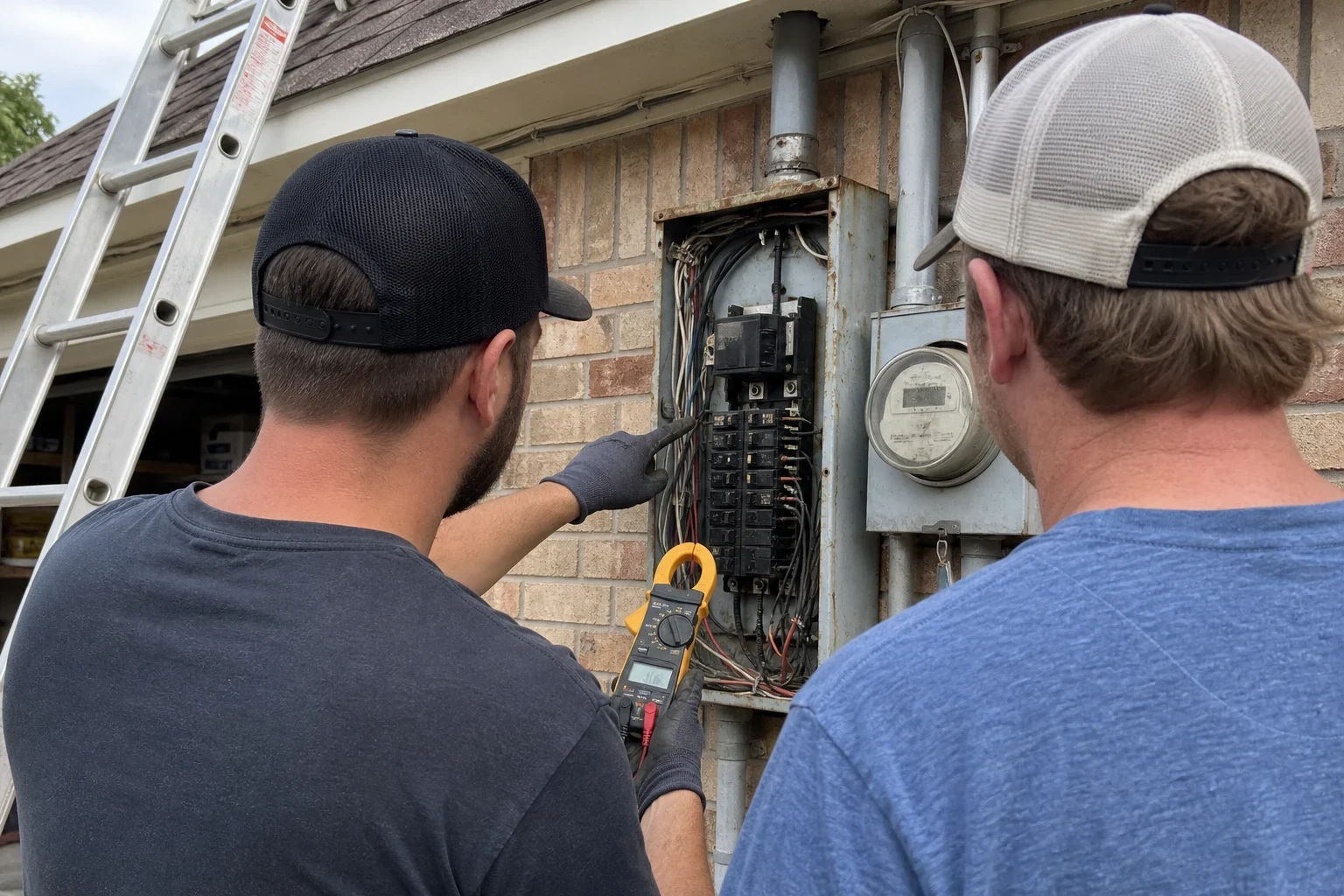
Common panel findings include double taps, breakers oversized for their wire, missing knockout fillers and unlabeled circuits. We fix each one and update the directory so every label matches its circuit. If the panel itself is the issue, we'll tell you and point you to our panel upgrades service.
- 04
Grounding and bonding fixes
We inspect the grounding electrode conductor, the ground rod connection and the bonding to metal water and gas pipes. Three-prong outlets on ungrounded circuits get a real ground or GFCI protection with the required labels.
- 05
Splices, boxes and cover plates
Open splices in attics and garages are moved into listed, covered junction boxes. Missing cover plates, loose devices and outdoor receptacles lacking in-use covers are handled during the same visit.
Questions about Code Corrections?
Call(682) 463-1576Signs you need inspection corrections
Your buyer's report lists electrical items
Sellers often get a repair request tied to the home inspection. Clearing those items with documentation can keep the sale on schedule.
A permit inspection failed
If an inspector failed work on a remodel or addition, the correction notice lists what must change before reinspection.
Your insurer asked for changes
Some carriers flag specific panels, ungrounded wiring or visible hazards and want proof they were addressed.
Previous owner did the wiring
Extension-cord-style wiring, splices taped together outside a box, or outlets added off a lighting circuit are typical signs of unpermitted work that will not pass a careful look.
Three-prong outlets that test open ground
A cheap plug-in tester showing an open ground means the outlet looks grounded but is not, which matters for surge protection and for some appliances.
How the work goes
- 1
Book the visit
You book a service visit by phone and tell us where the report came from. Have the report handy so we can plan the right parts and time.
- 2
Walk the list on site
We check every flagged item in person, because reports sometimes miss the cause. A warm breaker might be a loose lug rather than a bad breaker.
- 3
Agree on the scope
You get a written list of each correction and its cost before we start. Nothing outside that list is done without your approval.
- 4
Correct and test
We make each repair, then verify it with the right test: GFCI trip testing, polarity and ground checks, and torque on panel terminals. Permits and inspections are handled as required by the local jurisdiction.
- 5
Follow up
We check back after the job to confirm the corrections passed and are holding. We also walk you through simple upkeep, like monthly GFCI testing and what a tripped AFCI is telling you.
What moves the price of correction work
Correction work is priced per item on your list, so the total depends on how many items there are and what each one really needs. Some lines take minutes, others open up a larger problem. We give you the full picture before work begins.
- Number of items
- A list of three cover plates and a GFCI is a short visit. A dozen items across the panel, attic and exterior takes longer and more material.
- Panel condition
- Clearing double taps and oversized breakers is routine. A panel with no open spaces, corrosion or a brand known for failures may need replacement instead.
- Access
- Junction boxes buried in blown-in insulation or tight attic corners take more time, and in a Texas summer we schedule attic work early in the day to work safely.
- Permit requirements
- Some corrections need a permit and inspection, which adds fees and scheduling time. Device swaps usually do not.
- What the fix uncovers
- An ungrounded outlet might reveal a whole circuit of old two-wire cable. If that happens, we stop, show you, and give you options, including our whole-home rewiring service.
Common questions about correction work
Must every item on my home inspection report be fixed?
Not necessarily. A buyer's report notes deficiencies, but which ones get fixed is often negotiated. A failed permit inspection is another matter: those items have to be corrected before the work passes. We help you separate the safety items from the minor ones.
Will the work be done before I close?
We schedule a service visit and work toward your timeline as closely as our calendar allows. Mention your closing date when you call so we can book early and order parts ahead. We can't guarantee a turnaround, but we'll tell you honestly what is realistic.
Is a permit part of correction work?
When the work calls for one, yes. Permits and inspections are handled as required by the local jurisdiction, and we let you know at the start which items need them.
Do I get documentation for the buyer or inspector?
Yes. We give you a written summary of each item, what we found and how we corrected it. Many sellers forward it directly to the buyer's agent.
What happens if a fix turns up a larger problem?
We pause and show you before going on. You get the cause, the options and a cost for each, and the choice is yours. A loose connection can be a sign the panel would benefit from our torque and cleans service.
How do I keep the fixes working?
Once a month, press the test button on each GFCI and reset it. If an AFCI or GFCI keeps tripping, stop resetting it; repeated trips mean something on that circuit needs a look. We go over this at our follow-up.
Get your correction list handled
Have your report ready and we will plan the visit around it. We fix each item, test it, and check back once the work is done.