ServicesEV Charger Installation
EV Charger Installation in White Settlement
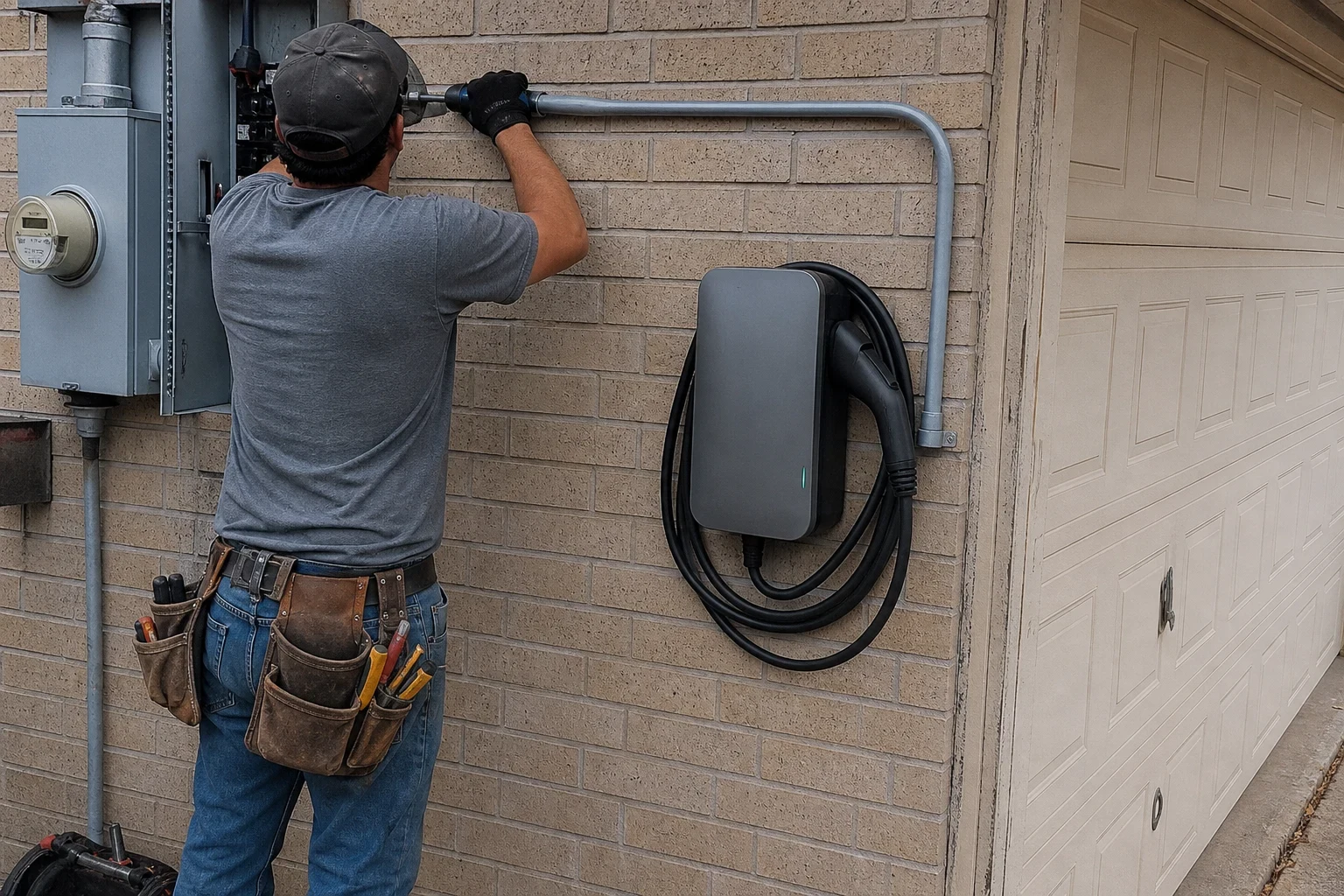
We install Level 2 chargers on a dedicated 240-volt circuit sized for continuous load, after checking that your panel can carry it. Once you've been charging for a few weeks, we check back to see how the circuit is holding up and answer what came up.
Getting a Level 2 Charger Wired Right
Plugging into an ordinary 120-volt outlet with a Level 1 cord gains you just a few miles of range for each hour. A 240-volt Level 2 charger covers most daily driving in one night. The catch is that it pulls a large current for hours on end, which almost nothing else in a house does.
Code counts EV charging as a continuous load, so the breaker and conductors must be rated for 125 percent of the charger's draw. That means a 48-amp hardwired charger needs a 60-amp circuit with wire to match. A loose lug, wire that is too small or a cheap receptacle can run hot night after night and never trip a breaker.
We match the circuit to both the charger and your panel, install it neatly and load-test it. After that we keep in touch: a few weeks into normal charging, we check in to hear how it is going and go over the easy habits that keep the connection tight and cool.
What the Work Includes
- Load calculation on your panel
- We total the existing loads, including the AC condenser, electric range, dryer and water heater, against your service size. That tells us whether a new 40- to 60-amp circuit fits, or whether a load-management device or a panel upgrade makes more sense.
- Dedicated 240-volt circuit
- A new two-pole breaker and copper conductors sized for the charger's continuous rating, run in conduit or protected cable from the panel to the charger location. Nothing else shares the circuit.
- Hardwired unit or NEMA 14-50 receptacle
- For a hardwired charger, we land it directly and set its internal amperage to match the breaker. For a plug-in unit, we install an industrial-grade 14-50 receptacle with GFCI protection where the code calls for it, because builder-grade receptacles are a common source of heat damage.
- Permit and inspection
- We pull the permit and schedule the inspection as required by the local jurisdiction, and coordinate with the utility when the job calls for it.
- Load test and handoff
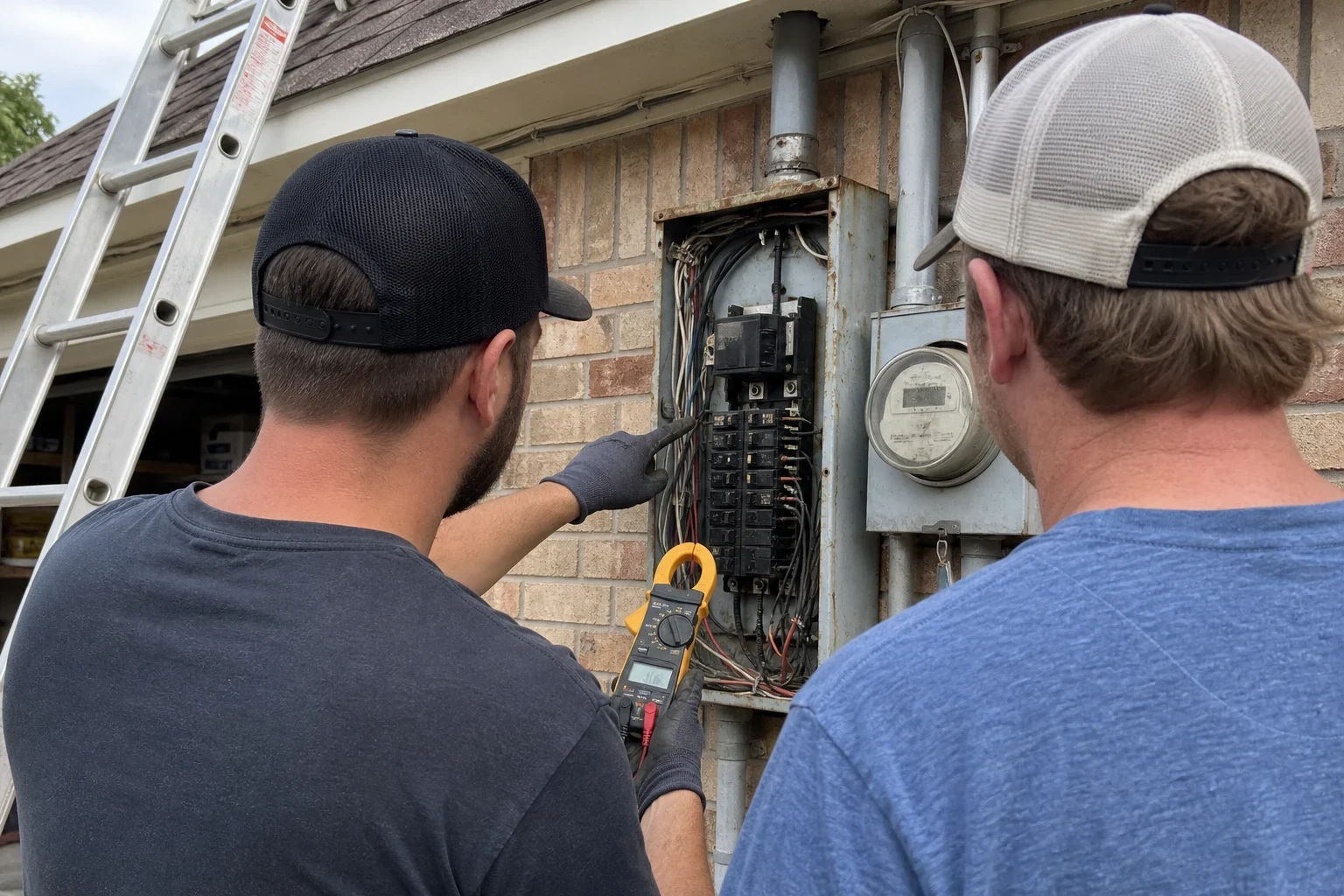
- We run the charger, measure voltage drop and current at the panel, and check terminations for heat. Before we leave, we show you where the breaker is and how the charger's amperage setting works.
Signs It's Time for a Dedicated Charger Circuit
Level 1 charging can't keep up
If the car isn't full by morning on a 120-volt cord, a Level 2 circuit typically fixes it with no change in your routine.
Warm or discolored outlet
A 14-50 or dryer receptacle that feels warm, smells hot or shows browning around the slots has a failing connection. Stop using it until it's checked.
Extension cords in the setup
Running a charger through an extension cord or adapter adds connection points that heat up under hours of steady current. A properly placed circuit removes them.
Breaker trips mid-charge
A breaker that trips partway through a session usually means the circuit is undersized, shared with another load, or the panel is near capacity. Our electrical repair work starts with finding which one.
A new EV is on the way
Getting the circuit in before delivery means the car charges properly from the first night.
How Your Install Day Runs
- 1
Look at the panel and the parking spot
We open the panel, read the service rating, check breaker space and note the route to where you park. We ask which charger you have and whether you'd like it in the garage or outside on the driveway.
- 2
Explain the plan and the price
You hear exactly what the circuit needs, which wire, breaker and receptacle or hardwire option, and why. If the panel can't take the load, we say so and lay out the options before any work starts.
- 3
Run the circuit and mount the charger
We install the breaker, pull the conductors, mount the charger or receptacle at a comfortable cord height, and seal any exterior penetrations. Outdoor equipment gets weather-rated boxes and fittings suited to North Texas sun and storms.
- 4
Test under real load
We charge the car or simulate the load, check voltage at the charger, confirm the breaker holds, and torque every lug to spec. Then the inspection is scheduled.
- 5
Check back after you've used it
A few weeks later, we follow up. We ask about charging times, any tripping or warmth, and remind you how to care for the cord and connection.
What Changes the Price
The same charger can take very different amounts of labor and material from one home to the next. Most of the difference comes from your panel, the distance and the route for the wire. We go through each one at your visit before you decide.
- Room in the panel
- When the load calculation leaves room, the circuit goes right in. When it does not, a load-management device or a panel upgrade may be needed, and the job grows.
- How far the charger sits from the panel
- A longer run uses more copper, and a long high-amperage run may call for heavier wire to hold down voltage drop.
- The path for the wire
- An open garage wall beside the panel is quick. Fishing through finished walls, going across an attic or trenching to a detached location adds time.
- Charger type and amperage
- A 60-amp hardwired charger needs a bigger breaker and heavier wire than a 40-amp plug-in setup. Mounting it indoors or outdoors also changes the fittings.
- Permit steps
- Each jurisdiction has its own permit and inspection process, and those steps are included in the job regardless.
EV Charger Questions We Hear
Something not covered here? (682) 463-1576
Can you put the charger in my garage?
Yes. Most chargers go in the garage, often near the panel. We pick a spot where the cord reaches the car's charge port without stretching and stays off the floor.
Should I hardwire the charger or plug it in?
A hardwired unit removes the receptacle, which is the part most likely to fail, and can charge faster. A plug-in unit on a 14-50 receptacle can go with you if you move. We weigh the two against your car and panel.
Will adding a charger force a panel upgrade?
Not always; the load calculation decides it. A load-management device can sometimes let a panel near its limit avoid an upgrade, and when it can't, our Panel Upgrades service covers that work.
Can the charger be mounted outdoors near the driveway?
Yes, with an outdoor-rated charger and weatherproof conduit, boxes and fittings. Shading it from direct afternoon sun helps the electronics last.
What care does the charger need?
Hang the cord on its holster so it isn't run over or kinked, keep the connector cap closed, and never plug it into an extension cord. If the breaker trips or a plug or outlet gets hot, stop charging and let us know. We go over this again at our follow-up.
Does the job include the permit?
Yes. We pull the permit and handle the inspection as the local jurisdiction requires, so the installation is on record.
Ready to Charge at Home
Tell us your car, your charger and where you park. We'll book a visit, check the panel and get the circuit in right, then follow up after you've been charging.