ServicesTorque & Cleans
Torque & Cleans in White Settlement
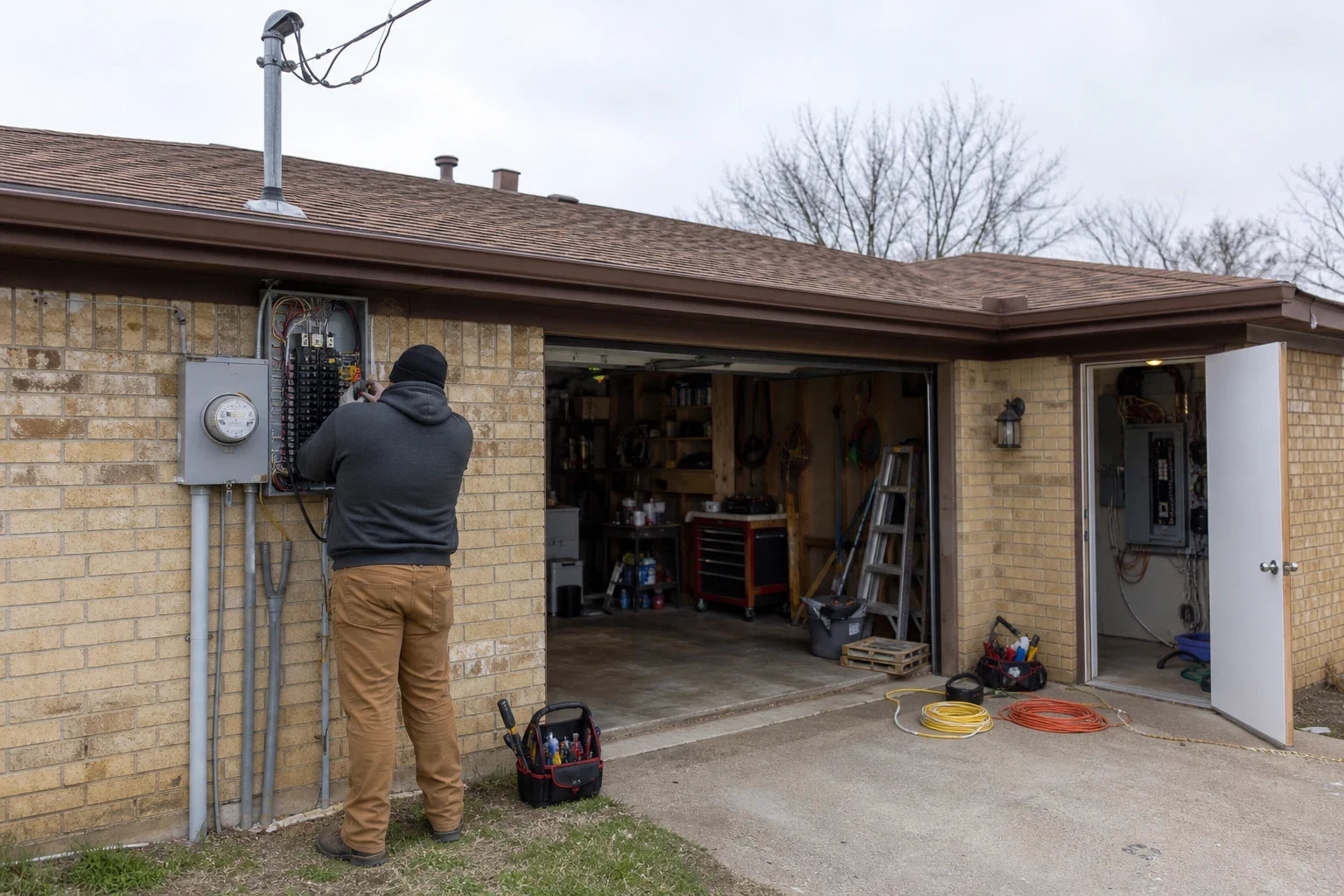
Panel connections loosen a little every time they heat up and cool down. A torque and clean brings each lug, breaker terminal and bus connection back to the manufacturer's spec and clears out the dust and corrosion that make them run hot. Afterward, we follow up to see how things are holding.
What a Torque and Clean Does for Your Panel
Every connection in your electrical panel is a screw clamped against a wire. Current makes that joint warm, and when the load drops it cools. Copper and aluminum expand and contract at different rates than the steel and brass around them, so over years the clamp backs off. A loose joint has higher resistance, which makes more heat, which loosens it further. The usual end of that cycle is a scorched breaker, a melted neutral or a wire that arcs inside the enclosure.
A torque and clean interrupts that cycle before damage starts. We shut the panel down, tighten each termination with a calibrated torque screwdriver to the value printed on the panel label, and remove the dust, insect nests and oxidation that hold heat and invite tracking. It is preventive maintenance, not a repair, and it suits a panel that works fine today.
Once the work is done, we explain what we saw and how to look after the panel, then check back with you later. If something we noted was borderline, that follow-up is when we talk it through.
What We Do During the Visit
Main lug and breaker torque
We bring the main breaker terminals, branch breaker screws and any subpanel feeders to the inch-pound values the manufacturer lists. Overtightening is a problem too, since it can crush strands or crack a breaker body, so we work to the number instead of by feel.
Neutral and ground bars
Neutral and ground bar screws loosen just like breaker terminals and are easy to overlook. We tighten each one, confirm there is only one neutral per hole, and point out any doubled-up conductors that need correcting.
Cleaning the enclosure
We vacuum and brush out dust, debris and the mud dauber nests common in outdoor panels. Built-up dust holds heat and, with humidity, can create a path for current where it should not go.
Aluminum conductor care
Aluminum service and feeder wires cold-flow under pressure and oxidize when exposed. Where aluminum lands on a lug, we clean the contact surface and apply antioxidant compound before retorquing.
Heat and damage check
While everything is open, we look for discolored insulation, darkened bus stabs, pitted breaker jaws and brittle wire jackets. You get photos of anything that concerns us and a plain explanation of what caused it.
Signs Your Panel Is Due for One
- A breaker feels warm
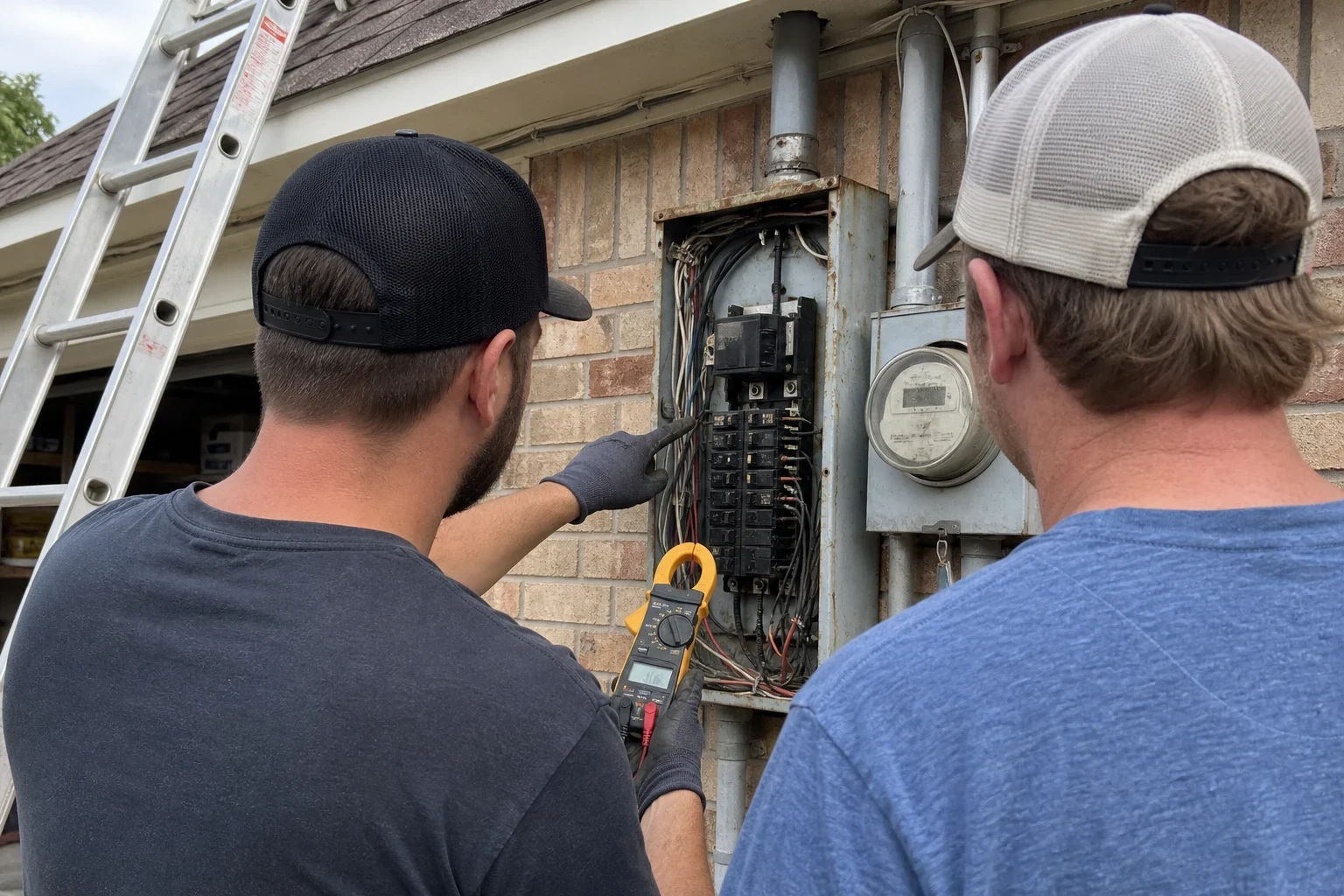
- A breaker that is warm to the touch on an ordinary day often has a loose terminal behind it. The heat is coming from resistance at the connection, not the breaker itself.
- Buzzing or crackling
- A steady hum from a breaker or a faint crackle inside the cover can mean arcing at a loose joint. Arcing erodes metal quickly, so it is worth looking at soon.
- Lights that dim under load
- If lights dip when the AC compressor or dryer kicks on, a loose neutral or main lug may be dropping voltage. A torque and clean is often the first step in finding out.
- An outdoor panel in full sun
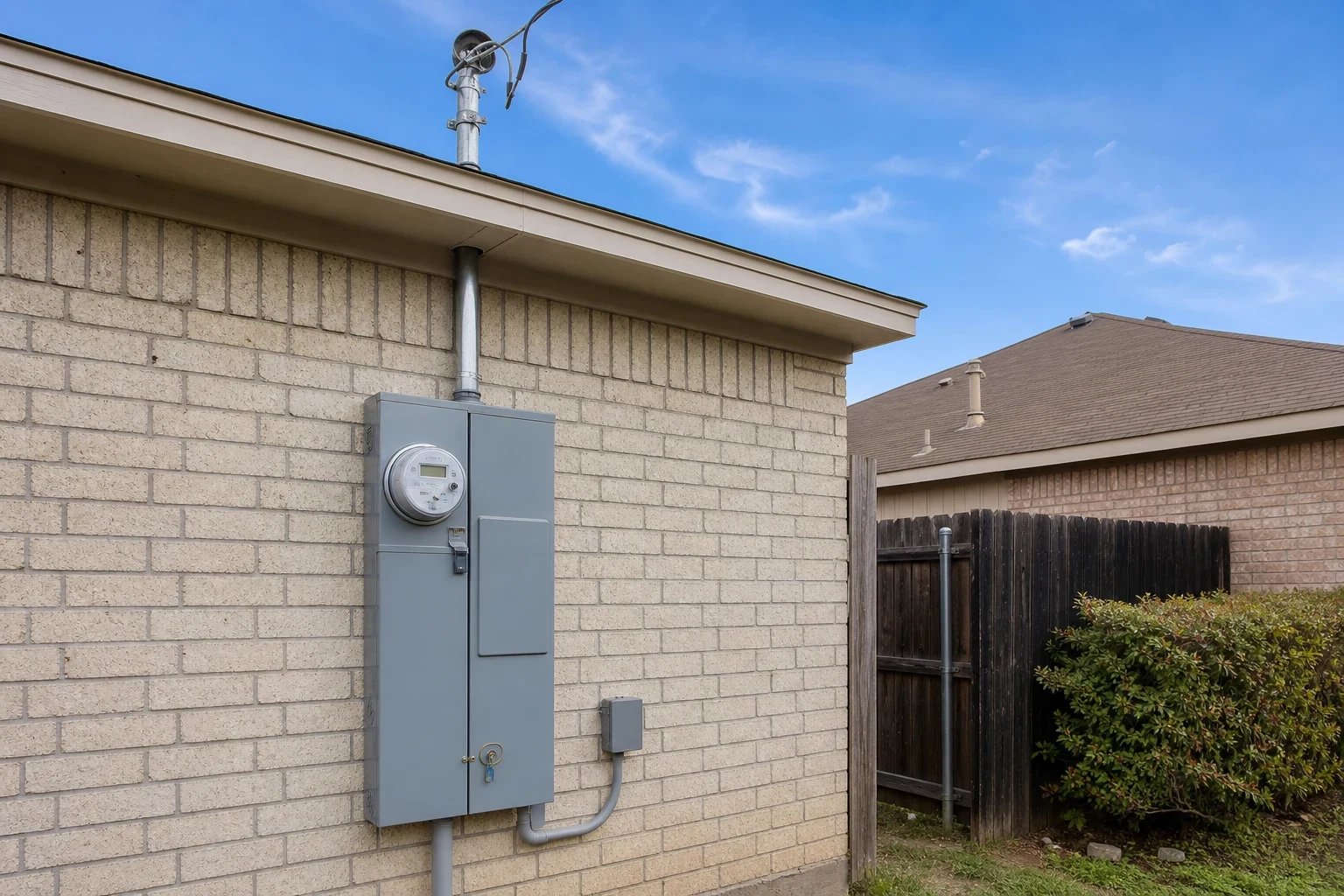
- Panels on west- or south-facing exterior walls take a hard beating from Texas summer heat, which adds to the expansion cycle on every connection. They also collect dust and insects faster than indoor panels.
- Years without anyone opening it
- If nobody has had the dead front off since the house was built or the panel was replaced, the connections have never been checked. That alone is a reasonable reason to book one.
How the Visit Runs
- 1
We book the shutdown with you
When you call, we ask about the panel brand, its location and any subpanels or a generator transfer switch. We tell you roughly how long the power will be off so you can plan around refrigerators, medical equipment or work from home.
- 2
Look first, then de-energize
We remove the cover, look at the panel while it is still under load, and note any obvious hot spots. Then we turn off the main and verify dead with a meter. The service conductors on the line side of the main stay live, so we tell you up front if a utility disconnect is needed to work on them.
- 3
Torque, clean and inspect
Each termination is tightened to spec, the enclosure is cleaned, and aluminum connections get antioxidant compound. Anything damaged is photographed and set aside for your decision rather than replaced on the spot.
- 4
Power back on and walkthrough
We restore power, confirm the circuits came back, and walk you through what we found. You get care tips, like keeping the cover latched and leaving clear space in front of the panel.
- 5
We check back
After the visit, we follow up to ask whether anything has changed, such as tripping, flicker or a warm breaker. If you notice something, we can sort out the next step together.
What Affects the Price
A torque and clean is priced by how much work is inside the enclosures, not by a flat guess. We explain what will move the number when you call and confirm it before we start.
- Circuit count and subpanels
- A 40-space panel with a detached garage subpanel takes longer than a small panel with a dozen breakers. Each extra enclosure adds its own terminations to torque.
- Aluminum wiring
- Aluminum feeders or branch circuits need surface cleaning and antioxidant at every lug, which adds time over copper-only panels.
- Condition inside
- Heavy corrosion, packed debris or nests take longer to clear. Burned breakers or damaged bus sections are quoted separately as repair work.
- Utility coordination
- If the main lugs on the line side need attention, the utility has to disconnect service first. That scheduling can affect both timing and cost.
Questions About Torque and Cleans
- How often does a panel need a torque and clean?
- Homes don't have one fixed schedule. If your panel has never been opened, is mounted outside, or has aluminum conductors, it makes sense to do one now. From there, we recommend an interval based on what we find inside.
- Is the power off for the entire visit?
- Only during the tightening and cleaning, which we do with the panel de-energized for safety. We inspect before and after with the power on. You get an estimate of the time when you book.
- What if you find bus damage or a burned breaker?
- We pause, photograph it and show you. Replacing damaged parts counts as electrical repair, so we lay out the options and the cost and leave the choice to you. If the damage is extensive, we will be straight with you about whether a panel upgrade is the better path.
- Could I tighten the screws on my own?
- We advise against it. Even with the main off, the line side of the main breaker is still live, and the right torque differs from one breaker and lug to the next. Overtightening a screw can harm the conductor just as much as leaving it loose.
- Are my surge protector and generator transfer switch covered?
- They can be. Let us know what is tied into your panel when you call, and we will add those terminations to the visit. We also check surge protection devices for their status lights and secure leads as part of the job.
Get Your Panel Connections Checked
A torque and clean takes part of a day and tells you exactly what is going on inside your panel. We follow up afterward, so any change gets noticed early.