ServicesGenerator Installation
Generator Installation in White Settlement
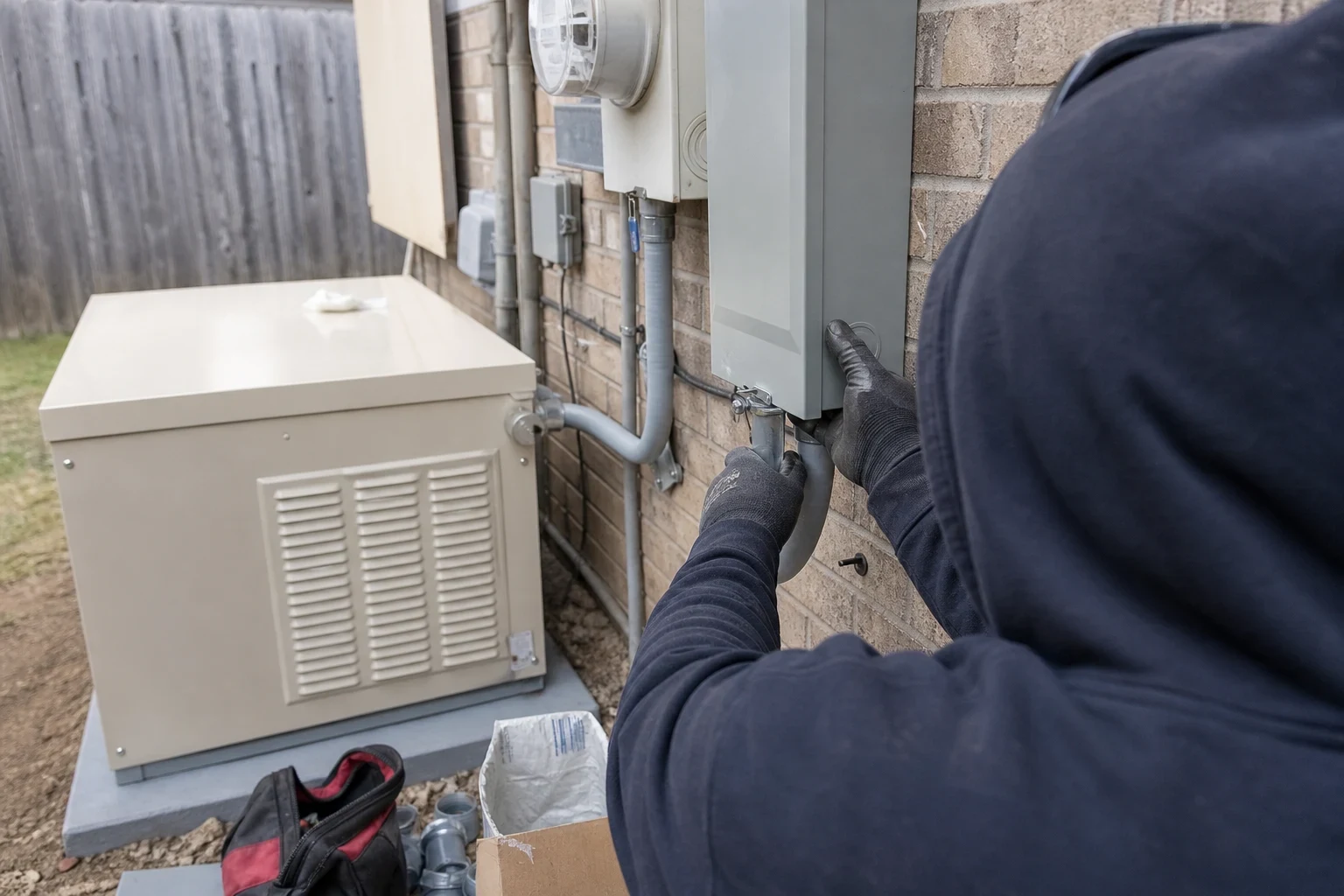
We size the generator to the loads you actually need, wire it through a transfer switch so it can never backfeed the utility line, and come back after it is running to show you how to keep it ready for the next outage.
What a Proper Generator Hookup Involves
A generator is only as useful as the wiring behind it. The unit has to be matched to your starting and running loads, connected through a transfer switch or a listed interlock, and set where its exhaust and heat stay clear of windows, doors and vents. Skip any of those and you get tripped breakers, a stalled unit when the AC compressor kicks on, or a dangerous backfeed onto the street.
We install permanent standby units on natural gas or propane, and we set up inlet boxes and interlock kits for portable generators. North Texas outages tend to come with summer storms and the occasional winter ice event, so we plan around keeping cooling, heating, refrigeration and well or sump pumps on, not just a few lights.
The job is not finished when the unit starts. We check back after it has run its first scheduled exercise cycles and walk you through what to watch, what to log and when it needs service.
What the Work Includes
Load calculation
We list the circuits you want backed up and add up running watts and the inrush current of motors like AC compressors and pumps. That number sets the generator size and tells us whether load management modules are needed.
Transfer switch or interlock
Standby units get an automatic transfer switch, either service-entrance rated or feeding a separate essential-loads panel. Portable setups get a power inlet box and a breaker interlock, so the main and generator breakers can never be on at the same time.
Pad, placement and conduit
We set the unit on a level pad at the clearances the manufacturer and code require, then run conductors in conduit sized for the generator's output breaker.
Fuel connection coordination
Gas or propane supply has to be sized for the unit's full-load draw. We coordinate that connection as required so the generator is not starved of fuel under load.
Permits and inspection
We pull the permits and schedule inspections as required by the local jurisdiction, and coordinate with the utility where it applies.
Startup and follow-up
We test a full transfer and retransfer with your loads running, set the exercise schedule, then return to confirm it is behaving and to explain routine care.
Signs It Is Time to Add a Generator
- Outages that cost you
- Spoiled freezer contents, a hot house in August or frozen pipes from an ice storm add up quickly. A sized standby unit keeps the systems that cause those losses running.
- Medical or work equipment
- Oxygen concentrators, CPAP machines and home offices need power that comes back in seconds, which an automatic transfer switch provides.
- Extension cords through a window
- Running cords from a portable generator is a carbon monoxide and fire risk. An inlet box and interlock moves that power into your panel safely.
- A generator with no transfer switch
- If someone wired a generator straight into the panel or with a double-male cord, it can backfeed the utility line and injure line workers. That needs correcting before it is used again.
- A well pump or sump pump
- No power means no water or no drainage. These motors need a generator sized for their starting current.
How the Installation Runs
- 1
Site and panel visit
We look at your service panel, available breaker space, gas or propane supply and where the unit can legally sit. You get a written scope with the generator size and switch type before anything is ordered.
- 2
Permits and pad
Permits are filed as required, then the pad is set and conduit is run from the unit location to the transfer switch.
- 3
Wiring day
We mount the transfer switch, land conductors at the manufacturer's torque specs and connect the generator. Power is shut off for part of the day, and we tell you the window in advance.
- 4
Testing and inspection
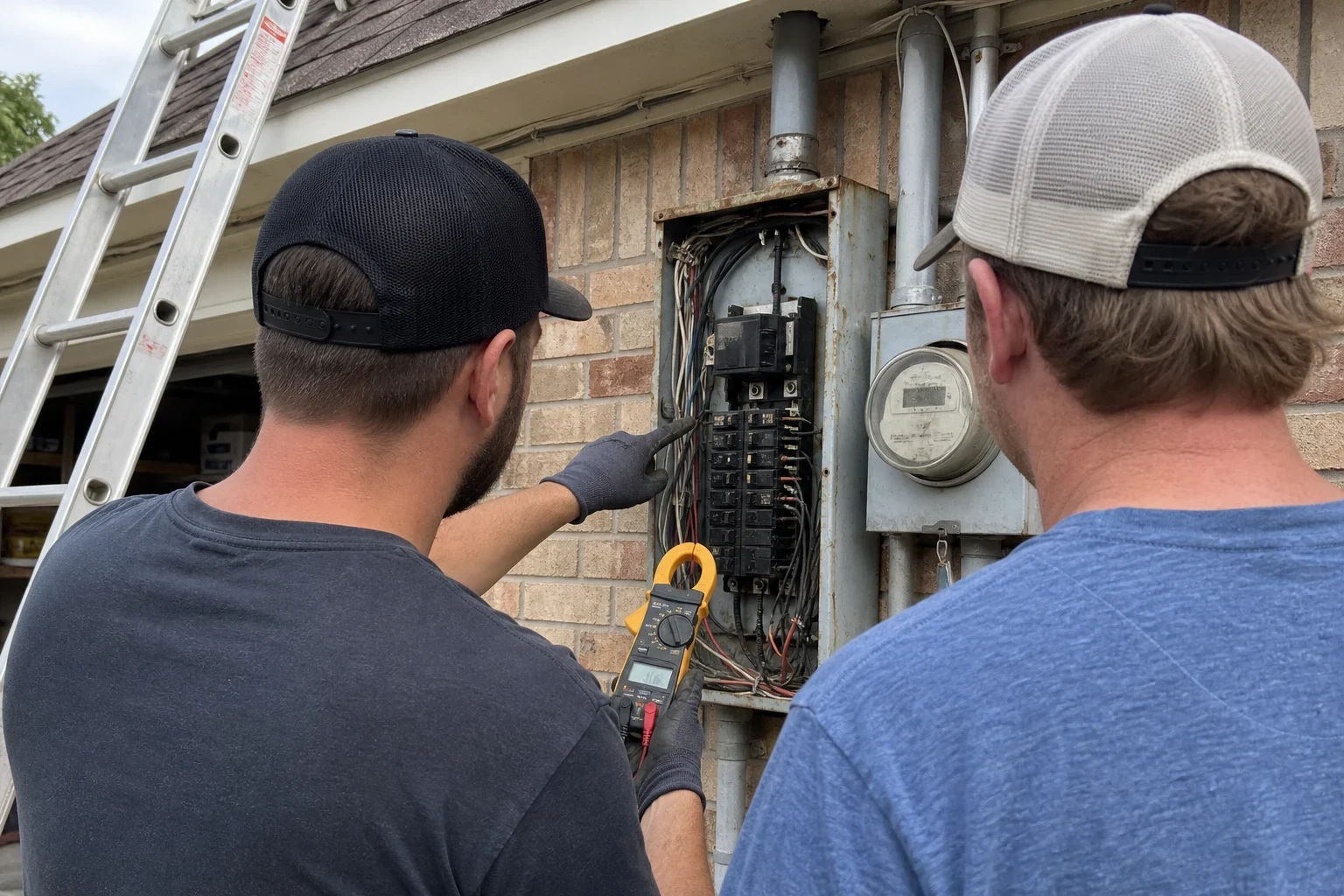
We simulate an outage, confirm the transfer, watch voltage and frequency under load, then retransfer to utility power. The inspector signs off on the finished work.
- 5
Check-back visit
After the first exercise cycles, we return to read the controller history, confirm no faults logged and show you the maintenance schedule.
What Drives the Cost
Generator projects range more widely than most electrical jobs, since the equipment, fuel and switchgear all depend on your loads. We set the price after seeing your panel and the site, and the written scope breaks out each part so you know where the money goes.
- Type and size of generator
- A portable inlet hookup costs much less than a whole-house standby unit. Higher kilowatt ratings raise the cost of both the equipment and the conductors.
- How the transfer switch is set up
- A service-entrance switch for the whole house, a subpanel for essential loads and a basic interlock kit differ widely in parts and labor.
- Wire run and fuel supply
- The farther the unit sits from the panel, the more wire and conduit it takes. A gas meter or line that is too small may need an upgrade.
- State of your panel
- A full or older panel may need work before the generator goes in. If so, we explain why and point you to our Panel Upgrades page.
- Permits and load control
- Permit fees and any load-shedding modules for air conditioners appear as separate lines in your scope.
Generator Installation Questions
- What size generator do I need?
- It depends on what you want running and how much those loads draw at startup. A central AC compressor can pull several times its running current for a moment. We do the load calculation on site so you are not paying for capacity you will never use or buying a unit that stalls.
- Can I just plug my portable generator into a dryer outlet?
- No. That backfeeds the panel and can energize the utility line, which is dangerous for line workers and for you. A power inlet box with a breaker interlock or manual transfer switch is the safe way to do it.
- How loud is a standby generator, and where can it go?
- Most residential standby units are about as loud as a central AC condenser while running. Placement is set by manufacturer clearances from openings and by code, and we confirm the spot before the pad goes in.
- How do I maintain it once you leave?
- The unit runs a short exercise cycle on a schedule, and you should glance at the controller for fault lights. Oil, filters and the battery need attention at the intervals the manufacturer lists. We explain all of this at our check-back visit, and our Generator Service & Repair page covers ongoing service.
- Should I get a generator or a battery system?
- Generators handle long outages and heavy loads as long as fuel is available. Batteries are silent and switch over instantly but store limited energy. Our Home Battery Backup Systems page explains that option if you want to compare.
Line Up Backup Power Before Another Outage
We review your panel, your loads and the install site, then write up the scope. After installation, we return to confirm the generator is running properly.