ServicesLighting Installation
Lighting Installation in White Settlement
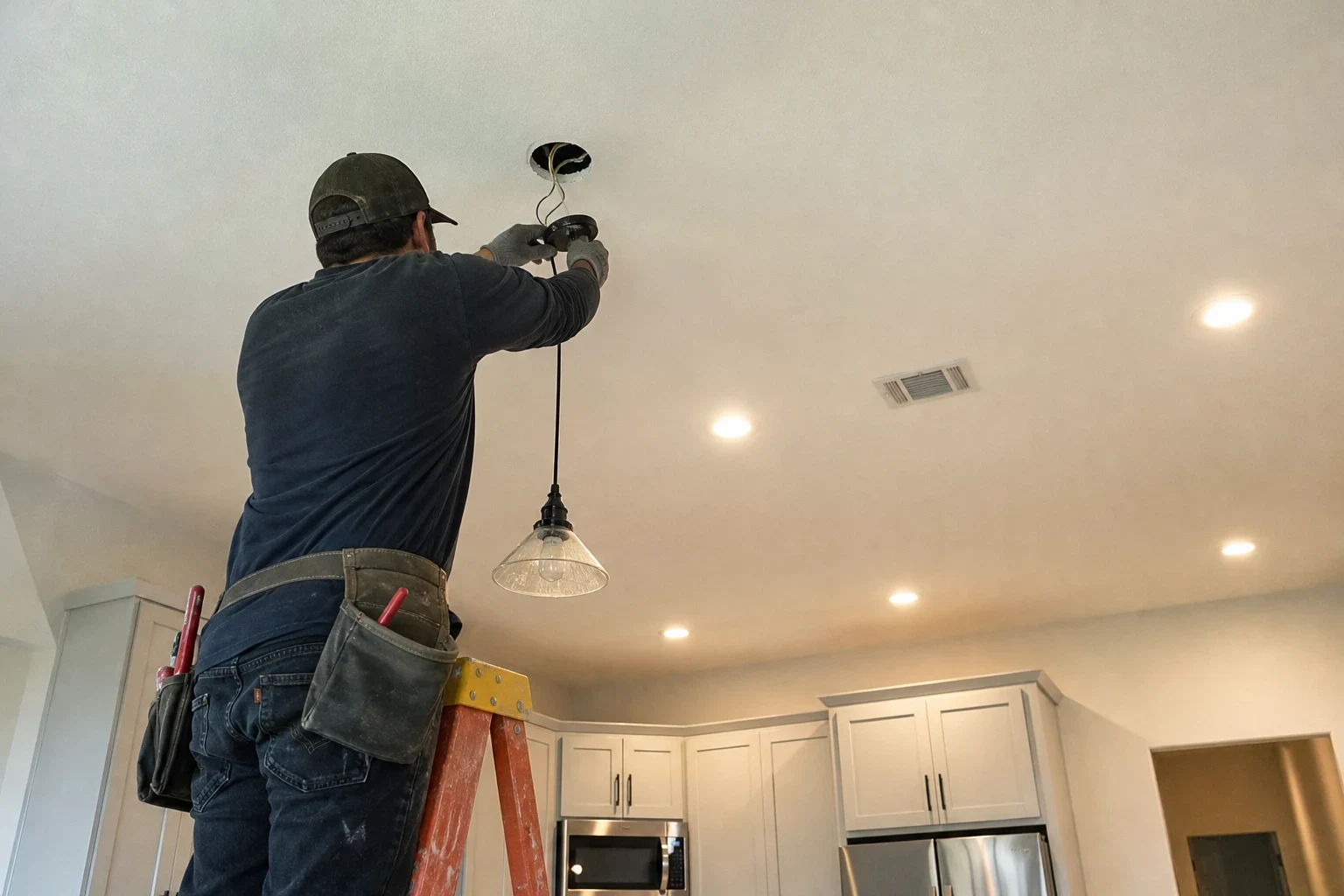
We install recessed lights, pendants, ceiling fans, under-cabinet strips and outdoor fixtures, each matched to the right box, dimmer and circuit. After the job we check back to see how everything is running and show you how to care for what we put in.
New lighting that suits the wiring behind it
The fixture is the easy part. What decides whether it lasts is behind the ceiling: a box rated for the weight, a circuit with room for the load, tight connections, and a dimmer that suits the LED driver inside the fixture. Most of the flicker, buzz and early burnouts we get called about trace back to one of those, not to the fixture itself.
We plan each job around those details, then install, test and clean up. A few weeks later we check back with you. LED drivers, fan mounts and outdoor gaskets tend to show any problem early, so that is when small adjustments are easiest. You also get plain care notes for each fixture: how to clean the lens, which bulbs it takes, and what a normal fan wobble looks like compared to one that needs attention.
If the lighting is part of a kitchen or room project, our remodel and addition wiring page covers the larger job.
What our lighting work covers
- Recessed and canless lights
- We use IC-rated housings or canless wafer fixtures wherever insulation touches the fixture, and airtight models where the ceiling sits under an attic. Attics bake through a North Texas summer, and LED drivers age faster when they run hot, so the heat rating is not a detail we skip.
- Pendants and chandeliers
- Heavier fixtures go on a box and brace rated for their weight, not a plastic box nailed to one joist. We set hanging height for the table or island it serves.
- Ceiling fans
- A fan pulls and twists on its mount in a way a light never does. We install a fan-rated box with a brace between joists, balance the blades, and wire separate fan and light control when the existing switch wiring allows it.
- Dimmers, switches and smart controls
- LED fixtures often need a trailing-edge or ELV dimmer, and we check the fixture spec before choosing one. We also wire three-way and four-way switching and confirm a neutral is in the box before installing a smart switch.
- Outdoor and landscape lighting
- Exterior fixtures get wet-location ratings, sealed boxes and GFCI protection. We add photocells, motion sensors or low-voltage landscape transformers where they fit how you use the yard.
- Under-cabinet and accent lighting
- LED tape and puck lights run on a driver, and we mount it where you can reach it later instead of sealing it behind a cabinet.
Signs your lighting needs an electrician
LEDs flicker or buzz on the dimmer
This usually means the dimmer was built for incandescent bulbs and is chopping the waveform in a way the LED driver dislikes. Swapping bulbs rarely fixes it for good.
A switch plate or fixture feels warm
Heat at a switch or canopy points to a loose connection or a bulb rated over what the fixture allows. Both are worth having checked before they scorch insulation.
One fixture keeps eating bulbs
Repeated burnouts in the same spot often come from trapped heat in an enclosed fixture, a worn socket, or vibration from a fan above.
A ceiling fan hung on an old light box
If your fan wobbles or the canopy has shifted, the box may not be fan-rated. That mount is carrying a load it was never designed for.
Rooms that rely on lamps and cords
A single overhead light and a tangle of floor lamps on extension cords is a common reason people call us for new recessed or switched lighting.
How a lighting job runs
- 1
Walk the space with you
After you book a service visit, we look at the rooms, ceiling framing, attic access and existing switches. We talk through fixture types and placement, then write out the scope so you know what is being installed and where.
- 2
Check the circuit and plan the runs
We confirm the circuit has capacity for the new load and plan wire routes through the attic or inside walls. Permits and inspections are handled as required by the local jurisdiction.
- 3
Install with the room protected
We lay drop cloths, cut openings to the fixture template so there is little to patch, set rated boxes and make each connection to spec. Debris and dust are cleaned up before we leave.
- 4
Test and show you the controls
Every switch, dimmer and sensor is tested, and we set the low-end trim on dimmers so lights don't flicker at the bottom of the range. We test GFCI devices and leave care notes for each fixture.
- 5
Check back after a few weeks
We follow up to ask how the lights are behaving. If a fan needs rebalancing or a dimmer needs a trim adjustment, that is the time to sort it out.
What affects the cost of lighting installation
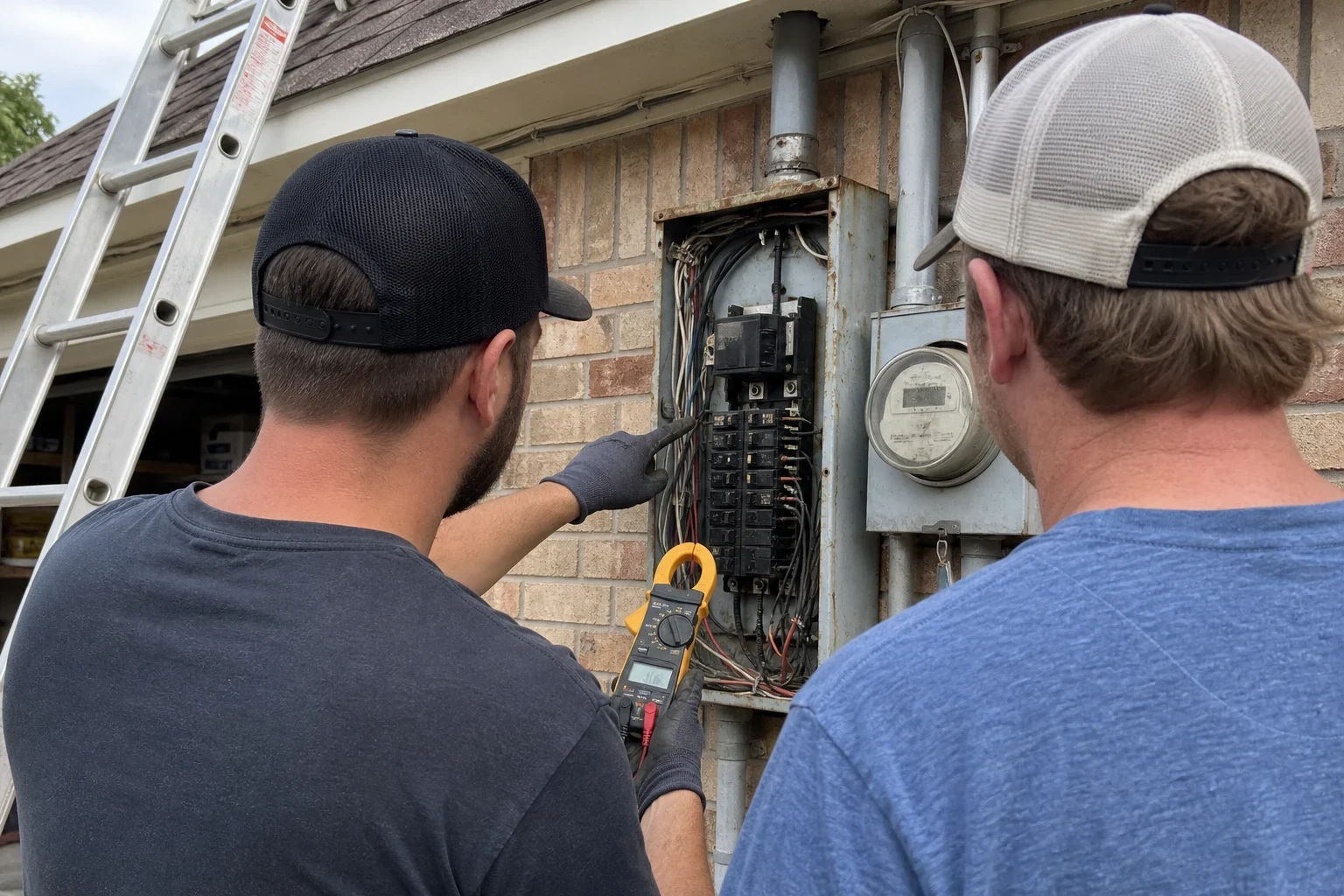
Every lighting job is priced from what we see at the walkthrough, and we explain what drives the number before work starts. A simple fixture swap on an existing box is a very different job from new recessed lights on a fresh circuit.
- Number and type of fixtures
- Recessed lights, fans and heavy chandeliers each need different boxes and bracing. More fixtures means more openings, connections and testing.
- Access to the ceiling
- Open attic space above a single-story room makes runs simple. Second-floor ceilings, tight attics and finished spaces with no access take more time to fish wire.
- Circuit capacity
- If the existing circuit is already loaded, a new circuit may be needed. When the panel itself has no room, we will explain whether panel upgrades belong in the plan.
- Controls and outdoor runs
- Smart switches, three-way switching, sensors and exterior wiring with weatherproof boxes all add parts and labor compared to a single standard switch.
Questions about lighting work
Something not covered here? (682) 463-1576
Can my light fixture be swapped for a ceiling fan?
In most cases, yes. A typical light box isn't rated to carry a fan, so we put in a fan-rated box and brace. For separate fan and light control, we see whether the switch leg has a spare conductor or whether a remote is the better choice.
Why do my new LEDs flicker on the dimmer?
The LED driver and the dimmer don't work well together. Older dimmers were built for incandescent bulbs, and many LEDs call for a trailing-edge dimmer with a minimum load setting. We pick the dimmer from the fixture spec and set its trim when we install it.
Is it okay to supply my own fixtures?
Yes. Give us the make and model when you book, and we will confirm the ratings, weight and dimmer compatibility ahead of install day, so nothing goes up in a spot it isn't suited for.
Does lighting work need a permit?
That depends on the job. Swapping one fixture for a similar one is not the same as running new circuits or wiring. We handle permits and inspections as the local jurisdiction requires and let you know at the start whether yours needs one.
What does the follow-up involve?
A few weeks after we finish, we get in touch to see how everything is working. If something has worked loose, flickers or wobbles, we return to adjust it. It's also a good moment to ask about bulbs or cleaning.
Get better light in your home
Tell us which rooms or outdoor areas you want lit and what bothers you about the lighting now. We will book a service visit, look at the wiring and plan the work from there.